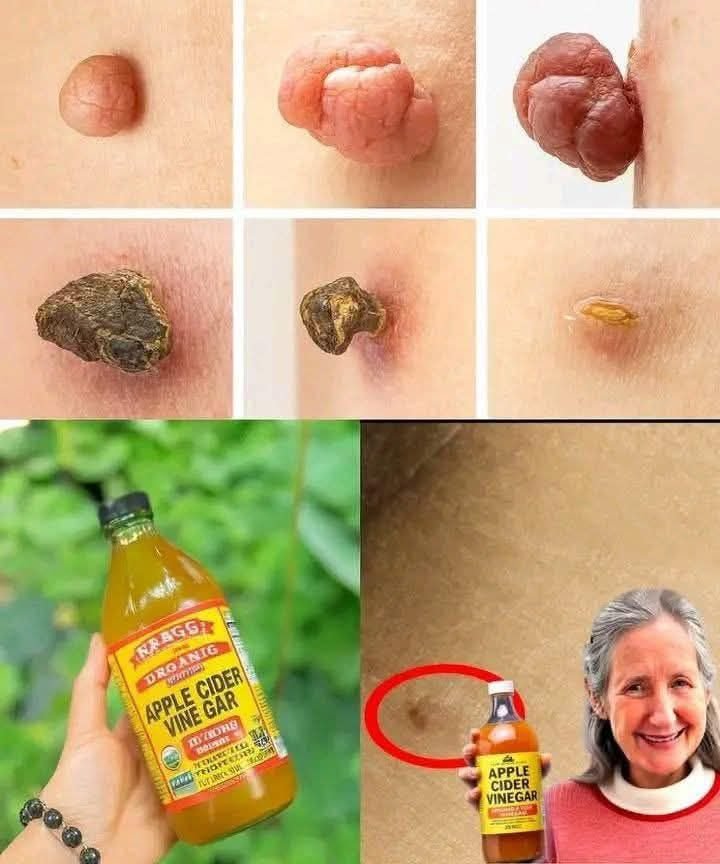
Different types of raised skin growths — some pink and soft, others dark and hardened — followed by a bottle of apple cider vinegar and a smiling person pointing to clear skin. The message is simple: apply apple cider vinegar and these skin growths will disappear.
It sounds easy, natural, and affordable.
But does it actually work? And more importantly — is it safe?
Let’s take a closer look.
What Are Skin Tags?
Skin tags are small, soft, benign (non-cancerous) growths that hang off the skin. They are very common and usually appear in areas where skin rubs against skin, such as:
-
Neck
-
Armpits
-
Under the breasts
-
Groin
-
Eyelids
They are typically flesh-colored or slightly darker and are made up of collagen fibers and blood vessels surrounded by skin.
Skin tags are not dangerous. They do not turn into cancer. Most people remove them only for cosmetic reasons or if they become irritated by clothing or jewelry.
Why Do People Get Them?
Several factors can increase the likelihood of developing skin tags:
-
Friction from skin folds
-
Weight gain
-
Hormonal changes
-
Pregnancy
-
Insulin resistance
-
Genetics
They are especially common in adults over 40, but they can occur at any age.
The Apple Cider Vinegar Trend
Apple cider vinegar (ACV) has become a popular “natural cure” for many things — from weight loss to blood sugar control. Now it is being promoted as a solution for skin tags.
The claim is that applying ACV to a skin tag daily will dry it out, causing it to darken, shrink, and eventually fall off.
Some people report that this works. But here’s what is actually happening.
Apple cider vinegar is acidic. When applied repeatedly to skin, it can cause irritation or chemical burns. If a skin tag falls off after ACV use, it may be because the acid damaged the tissue enough to cause it to die.
That does not mean it is safe.
The Risks of Using Apple Cider Vinegar on Skin Tags
Using ACV directly on the skin can cause:
-
Skin irritation
-
Chemical burns
-
Scarring
-
Infection
-
Discoloration
The risk is higher if the growth is not actually a skin tag. Some growths that look similar could be:
-
Warts
-
Moles
-
Seborrheic keratoses
-
In rare cases, skin cancer
Trying to treat an unknown lesion at home without proper diagnosis can delay important medical care.
If the growth bleeds, changes color, grows rapidly, or has irregular borders, it should always be evaluated by a healthcare professional.
How Doctors Safely Remove Skin Tags
If you want a skin tag removed, medical options are quick and simple. A doctor may use:
-
Cryotherapy (freezing it off)
-
Cauterization (burning it off safely with controlled heat)
-
Snipping with sterile instruments
-
Electrosurgery
These procedures are typically fast, minimally painful, and have low risk of infection when done properly.
Why Natural Remedies Go Viral
Natural remedies like apple cider vinegar appeal to people because they seem:
-
Affordable
-
Accessible
-
Non-medical
-
Easy to try at home
But “natural” does not always mean safe. Vinegar is natural — but it is still acidic enough to damage skin tissue.
Social media posts often show dramatic before-and-after photos without medical context. These images rarely show complications, infections, or scarring that can occur.
When to See a Doctor
You should consult a healthcare professional if:
-
You are unsure whether the growth is a skin tag
-
The lesion is painful or bleeding
-
It changes in shape, color, or size
-
It is located near the eyes or genitals
-
You have diabetes or immune system conditions
A proper diagnosis is important before attempting any removal.
Final Thoughts
Apple cider vinegar is not a miracle cure for skin tags. While some people may see results, the method works by irritating and damaging tissue — which carries real risks.
Skin tags are harmless in most cases. If they bother you, the safest and most reliable option is professional removal.