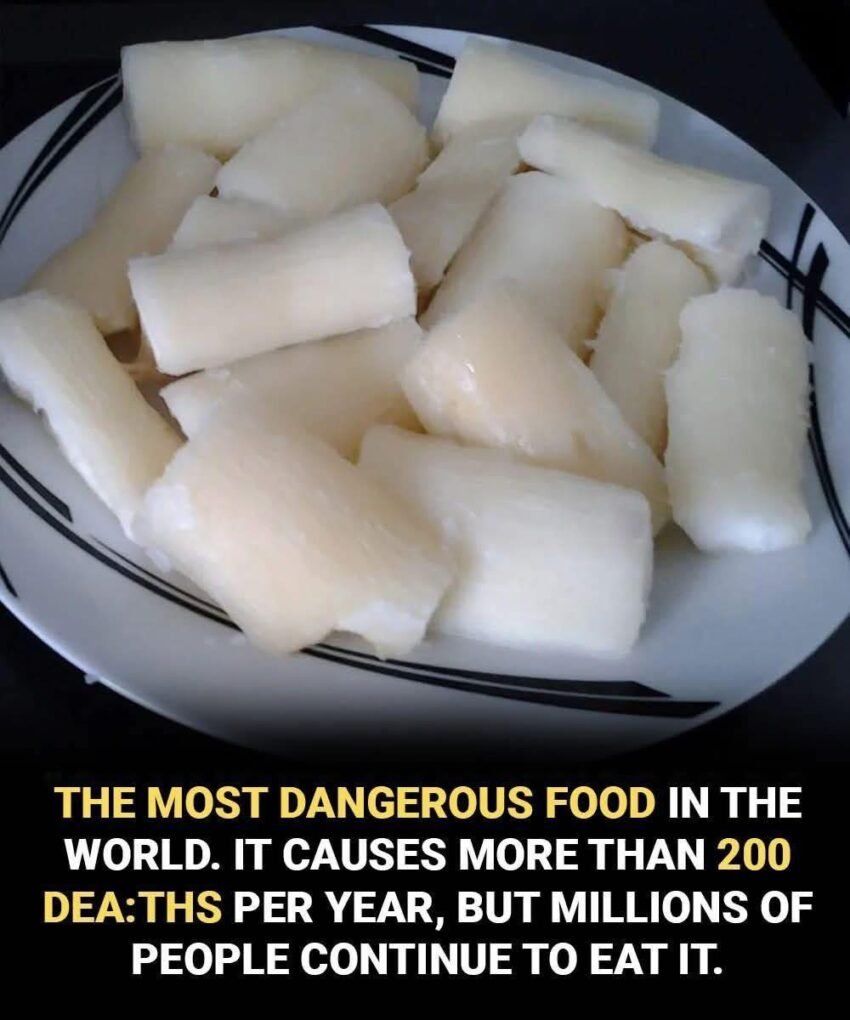
At first glance, the food in the image looks harmless. Simple white chunks neatly placed on a plate, ready to be eaten. For millions of people around the world, this is a daily staple. But what if I told you that this same food has been called one of the most dangerous foods in the world?
The food you see is cassava — also known as yuca or manioc. While it feeds more than half a billion people globally, it also carries a hidden risk that many people don’t fully understand.
Let’s explore why.
What Is Cassava?
Cassava is a starchy root vegetable grown mainly in Africa, South America, and parts of Asia. It is extremely drought-resistant, which makes it a lifesaving crop in regions where other plants struggle to survive. It can be boiled, fried, mashed, or ground into flour. In many countries, it is used to make bread, porridge, chips, and traditional dishes.
It is affordable, filling, and rich in carbohydrates — making it an important energy source for low-income communities.
But cassava has a dangerous side.
Why Is Cassava Considered Dangerous?
Cassava naturally contains compounds called cyanogenic glycosides. These compounds can release cyanide — a highly toxic chemical — when the plant tissue is damaged, chewed, or improperly processed.
There are two main types of cassava:
-
Sweet cassava (lower cyanide content)
-
Bitter cassava (higher cyanide content)
Bitter cassava can contain dangerously high levels of cyanide if not processed correctly. Eating raw or poorly prepared cassava can lead to cyanide poisoning.
The Health Risks
Cyanide poisoning can happen suddenly if someone consumes a large amount of improperly prepared cassava. Symptoms may include:
-
Headache
-
Dizziness
-
Vomiting
-
Stomach pain
-
Difficulty breathing
-
In severe cases, death
Long-term exposure to small amounts of cyanide from poorly processed cassava can also cause serious health problems. One condition linked to cassava is konzo — a neurological disease that leads to sudden and irreversible paralysis of the legs. This condition has been reported mainly in parts of Africa where cassava is a primary food source during droughts and food shortages.
According to health reports, cassava-related poisoning contributes to over 200 deaths per year worldwide. While this number may seem small compared to global food consumption, it is significant because these deaths are preventable.
Why Do Millions Still Eat It?
If cassava is so dangerous, why do millions of people continue to rely on it?
The answer is simple: food security.
In many developing regions, cassava is one of the few crops that can survive extreme weather conditions. It grows in poor soil and requires minimal care. During droughts or famine, cassava often becomes the main source of calories.
For many families, there is no affordable alternative.
When properly processed, cassava is completely safe to eat. The danger lies not in the plant itself, but in improper preparation.
How Cassava Is Made Safe
Traditional preparation methods are designed to remove cyanide. These methods include:
-
Peeling the root thoroughly
-
Soaking it in water for several days
-
Fermenting it
-
Drying it in the sun
-
Boiling it completely
These steps allow the toxic compounds to break down and evaporate before consumption.
Problems usually occur during food shortages when people skip proper processing steps due to urgency or lack of knowledge.
Education and awareness are key to preventing poisoning.
Nutritional Value of Cassava
Despite its risks, cassava does offer benefits:
-
High in carbohydrates for energy
-
Gluten-free
-
Contains small amounts of vitamin C
-
Easy to grow in harsh climates
However, cassava is low in protein and other essential nutrients. Populations that rely heavily on cassava without dietary diversity may face malnutrition.
The Real Issue
Cassava itself is not evil or inherently deadly. In fact, when handled properly, it is a lifesaving crop for millions.
The real issue is poverty, food insecurity, and lack of proper food education. Communities that understand safe preparation methods rarely face problems. The danger increases during crises — drought, war, displacement — when safe processing is disrupted.
So calling cassava “the most dangerous food in the world” may be dramatic. A more accurate statement would be: improperly prepared cassava can be deadly.
Final Thoughts
Food can nourish or harm depending on how it is handled. Cassava is a powerful example of how traditional knowledge and proper preparation transform a potentially toxic plant into a daily staple.
For millions of people, cassava is not a threat — it is survival.
Understanding the science behind it helps remove fear and replace it with awareness. And awareness, especially when it comes to food safety, can save lives.