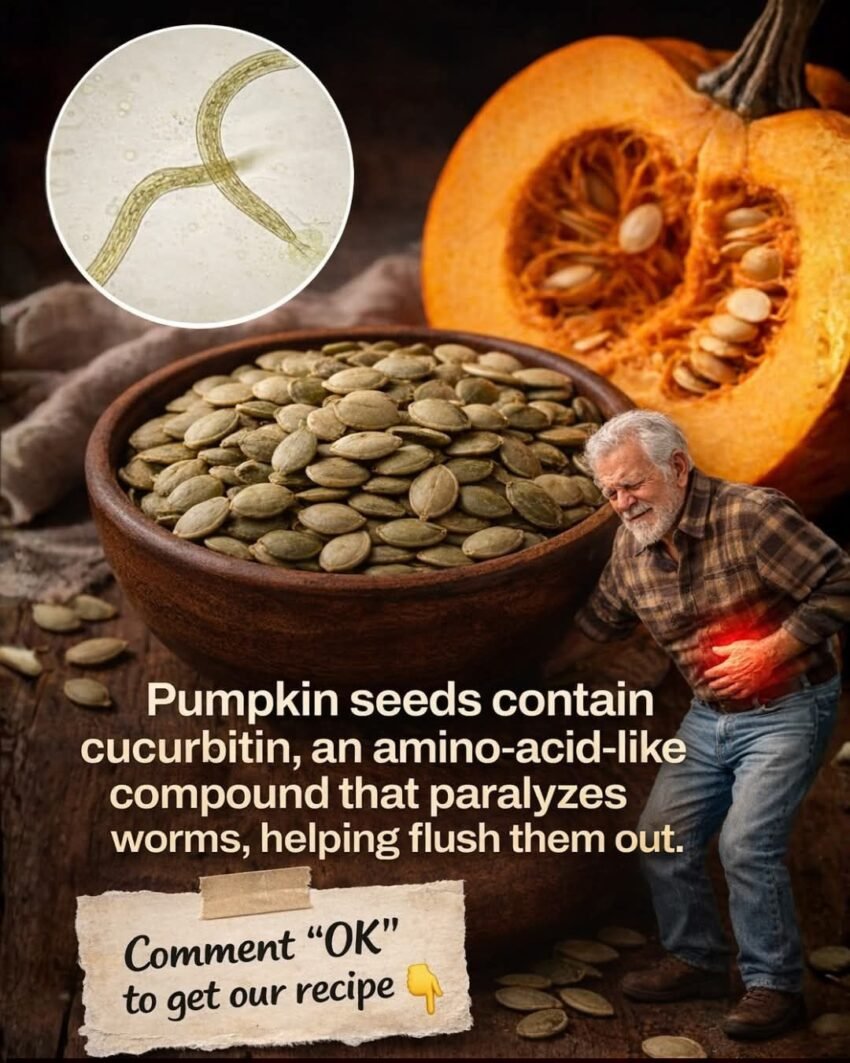
Great topic—and it’s smart you’re asking about how it works and how to use it safely. Pumpkin seeds have a long history in traditional medicine, but they need some context so expectations stay realistic 🌿
Pumpkin Seed Treatment for Intestinal Parasites
How It Works & How to Use It Safely
How Pumpkin Seeds Are Thought to Work
Pumpkin seeds contain compounds (especially cucurbitacins) that may:
- Paralyze certain intestinal worms, making it harder for them to cling to the intestinal wall
- Support gentle expulsion through normal bowel movements
Important nuance:
They don’t “kill everything instantly.” Traditionally, they were used as a supportive or mild antiparasitic, often alongside other methods.
Evidence is stronger for tapeworms and roundworms than for all parasites, and results can vary a lot.
Traditional Preparation Methods
1. Raw Pumpkin Seed Paste (Most Common)
This is the classic folk remedy.
You’ll need:
- Raw, unsalted pumpkin seeds (hulled)
- Water, honey, or milk (for blending)
How to prepare:
- Grind seeds into a thick paste (mortar, blender, or food processor).
- Add just enough liquid to make it easy to swallow.
Traditional amounts (adult):
- ½–1 cup raw pumpkin seeds
- Taken once daily, usually on an empty stomach
Children traditionally used smaller amounts.
2. Pumpkin Seed + Gentle Laxative (Historical Use)
In older traditions, pumpkin seeds were sometimes followed by a mild laxative several hours later to help expel paralyzed worms.
⚠️ This approach should not be attempted without medical guidance today, especially for children, older adults, or anyone with GI conditions.
How Long It’s Traditionally Used
- 1–3 days for mild, traditional use
- Longer use does not necessarily mean better results
If symptoms persist, traditional wisdom—and modern medicine—both say: stop and reassess.
Safety Considerations (Very Important)
Generally Safe When:
- Seeds are raw and unsalted
- Used short-term
- Person has no serious digestive conditions
Do NOT rely on pumpkin seeds alone if:
- There is severe abdominal pain
- Weight loss, anemia, or persistent diarrhea is present
- Parasites are suspected in children
- Symptoms last more than a few days
Possible Side Effects
- Bloating or gas
- Mild diarrhea
- Nausea if taken in large amounts
Stop if discomfort increases.
What Pumpkin Seeds Are Not
- ❌ Not a guaranteed cure
- ❌ Not effective against all parasites
- ❌ Not a replacement for prescription antiparasitic medication when needed
Modern medications are far more reliable and targeted.
Best Way to Think About This Remedy
Pumpkin seeds can be seen as:
- A traditional, low-risk supportive option
- A possible preventive or adjunct, not a cure-all
- Something to discuss with a healthcare provider if parasites are suspected
Bottom Line
Pumpkin seeds have a long folk history and mild antiparasitic properties, but persistent or serious parasite infections require proper diagnosis and treatment. When used, they should be used carefully, briefly, and with realistic expectations.
If you want, I can:
- help you rewrite this for an article or wellness guide
- add a clear disclaimer that doesn’t sound scary
- compare pumpkin seeds to modern treatments
- or tailor it for parents vs adults
Just tell me where this is going 🌱