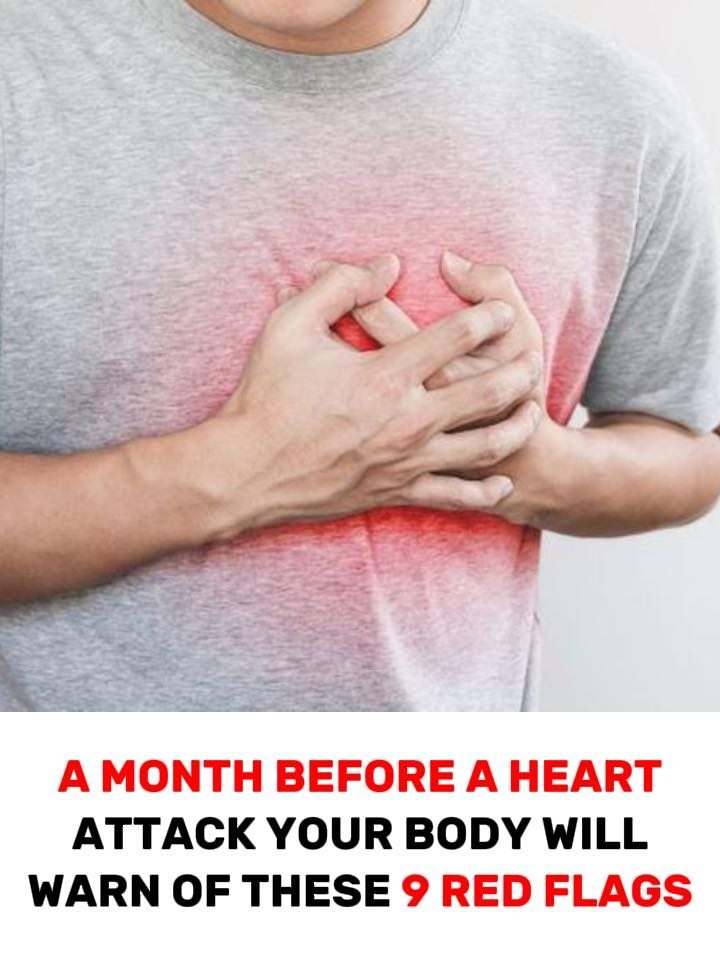
That headline is eye-catching — but let’s be precise: heart attacks can sometimes occur suddenly, yet research shows there are warning signs that may appear days to weeks before a major cardiac event. Knowing them can be life-saving.
Here are 6 early warning symptoms that can appear roughly a month before a heart attack:
1. Unusual Fatigue
- Feeling extremely tired for no clear reason
- Can happen even with minimal activity
- Often underestimated, especially in women
2. Mild Chest Discomfort
- Not always classic crushing pain
- May feel like pressure, tightness, or burning
- Sometimes occurs during exertion or stress
3. Shortness of Breath
- Especially with activity that was previously easy
- Can happen even without chest discomfort
- Often worsens over days or weeks
4. Flu-like Symptoms
- Nausea, indigestion, or mild vomiting
- Sweating more than usual, sometimes cold sweats
- General malaise that feels “off”
5. Pain in Other Areas
- Jaw, neck, shoulder, or upper back discomfort
- Sometimes mistaken for muscle strain
- Women often experience this instead of classic chest pain
6. Heart Palpitations or Irregular Heartbeat
- Feeling fluttering, racing, or skipped beats
- Can accompany fatigue and shortness of breath
⚠️ When to Seek Help Immediately
- Sudden severe chest pain or pressure
- Fainting, dizziness, or severe shortness of breath
- Pain spreading to arm, jaw, or neck
- Cold sweat, nausea, or vomiting
Call 911 or your local emergency number — even if symptoms seem mild.
💡 Key Takeaways
- Heart attack warning signs can be subtle or intermittent
- Women, diabetics, and older adults may have atypical symptoms
- Early recognition and quick medical evaluation save lives
I’ve got you covered. Here’s a practical “one-month heart warning checklist” you can use to monitor early signs safely and know when to seek medical attention. It’s designed for clarity and action, without causing unnecessary panic.
🩺 One-Month Heart Warning Checklist
Instructions:
- Check your symptoms daily or every other day.
- Rate severity on a scale of 0–3 (0 = none, 3 = severe).
- If several symptoms appear consistently or worsen, contact your doctor immediately.
| Symptom | 0 | 1 | 2 | 3 | Notes / Triggers |
|---|---|---|---|---|---|
| Unusual fatigue | Even at rest or with minimal activity | ||||
| Chest discomfort | Tightness, pressure, burning, or squeezing | ||||
| Shortness of breath | With mild exertion or at rest | ||||
| Flu-like symptoms | Nausea, vomiting, cold sweats, general malaise | ||||
| Pain in jaw/neck/shoulder/back | May be intermittent; note location and duration | ||||
| Palpitations / irregular heartbeat | Fluttering, skipped beats, racing heartbeat | ||||
| Swelling in legs/ankles | Fluid buildup can indicate heart strain | ||||
| Lightheadedness / dizziness | Especially with exertion or standing |
✅ Tips for Using This Checklist
- Track consistently: Morning or evening works best.
- Look for patterns: If fatigue, chest discomfort, or shortness of breath keeps showing up, don’t ignore it.
- Combine with lifestyle notes: Sleep, diet, exercise, and stress levels — can help doctors identify triggers.
- Seek urgent help: If chest pain is severe, persistent, or spreads to arm/jaw/back, call emergency services immediately.
⚡ Extra Safety Tip
Even mild symptoms in women, diabetics, or older adults can be significant. Early evaluation can prevent a major heart attack.