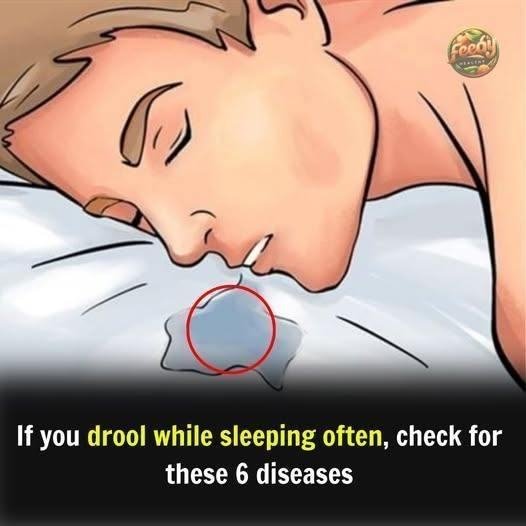
Drooling while sleeping is usually harmless, but frequent or excessive drooling can sometimes signal underlying health issues. Here are six conditions to be aware of:
1. Sleep Apnea
- Why: Blocked airways make breathing difficult, leading to mouth breathing and drooling.
- Other signs: Loud snoring, daytime fatigue, morning headaches.
2. GERD (Acid Reflux)
- Why: Acid reflux can irritate the throat and increase saliva production.
- Other signs: Heartburn, chest discomfort, sour taste in the mouth.
3. Neurological Disorders
- Conditions like Parkinson’s disease, ALS, or Bell’s palsy can impair muscle control around the mouth, causing drooling.
- Other signs: Facial weakness, tremors, slurred speech, difficulty swallowing.
4. Sinus or Respiratory Infections
- Why: Congestion can make it harder to breathe through the nose, so saliva pools in the mouth.
- Other signs: Stuffy nose, postnasal drip, cough.
5. Medication Side Effects
- Certain medications (e.g., sedatives, antipsychotics, or some seizure medicines) can increase saliva or reduce swallowing reflex.
- Other signs: Drowsiness, dry mouth at other times, changes in alertness.
6. Sleep Position or Jaw Issues
- Sleeping on your side or stomach can cause saliva to pool and leak.
- Temporomandibular joint (TMJ) problems may also affect how you swallow during sleep.
- Other signs: Jaw pain, headaches, teeth grinding.
Tips to Reduce Drooling
- Sleep on your back to help saliva drain naturally.
- Treat nasal congestion with saline sprays or decongestants.
- Avoid heavy meals, alcohol, or sedatives before bed.
- Maintain good oral hygiene and dental check-ups.
If drooling is persistent and accompanied by other concerning symptoms—like facial weakness, swallowing difficulty, or loud snoring—it’s best to consult a doctor or sleep specialist to rule out underlying conditions.
I can also make a practical guide with nighttime routines and exercises to reduce drooling naturally if you want. Do you want me to do that?