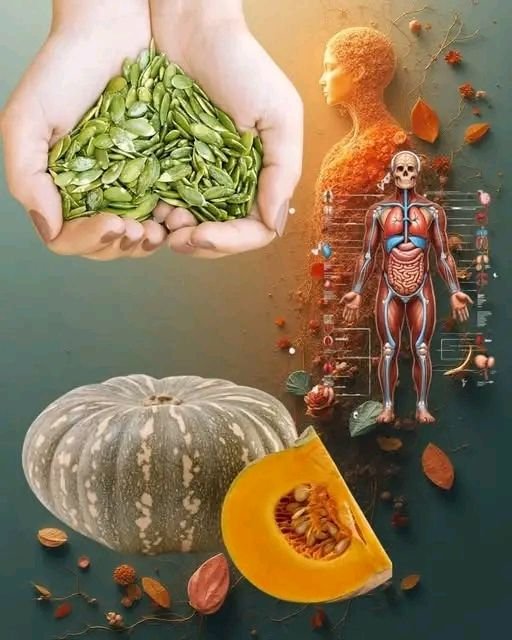
Pumpkin seeds are indeed nutritious and beneficial, but claims like “Nature’s forgotten medicine” or that they do “amazing things” should be viewed carefully—they support health, but they are not a cure-all. Here’s a realistic, safe look at what pumpkin seeds can do for your body.
🎃 Health Benefits of Pumpkin Seeds
- Rich in nutrients – high in magnesium, zinc, iron, and protein.
- Supports heart health – magnesium and healthy fats help maintain healthy blood pressure and circulation.
- Supports prostate health – zinc in pumpkin seeds is important for male reproductive health.
- Supports bone health – magnesium and phosphorus contribute to strong bones.
- Good for blood sugar – protein and fiber can help regulate blood sugar levels.
- Antioxidant properties – contain vitamin E and phenolic compounds that reduce oxidative stress.
- Supports immunity – zinc and other minerals help immune function.
- Promotes healthy sleep – contains tryptophan, a natural sleep-supporting amino acid.
- Supports digestive health – fiber helps with regular bowel movements.
- May reduce inflammation – healthy fats and antioxidants can help reduce minor inflammation.
🥄 How to Eat Pumpkin Seeds
- Raw: snack on a handful daily.
- Roasted: lightly roast with a pinch of salt or spices.
- Added to meals: sprinkle on salads, oatmeal, or yogurt.
- Ground: add to smoothies or baking for extra nutrients.
⚠️ Important Notes
- Eating pumpkin seeds is supportive, not curative.
- They do not cure diseases like cancer, diabetes, or heart disease.
- Portion control matters: 1–2 ounces per day is sufficient; they are calorie-dense.
- People with allergies to seeds should avoid them.
If you want, I can also give a recipe for a pumpkin seed honey tonic or a delicious pumpkin seed snack mix that maximizes these benefits.