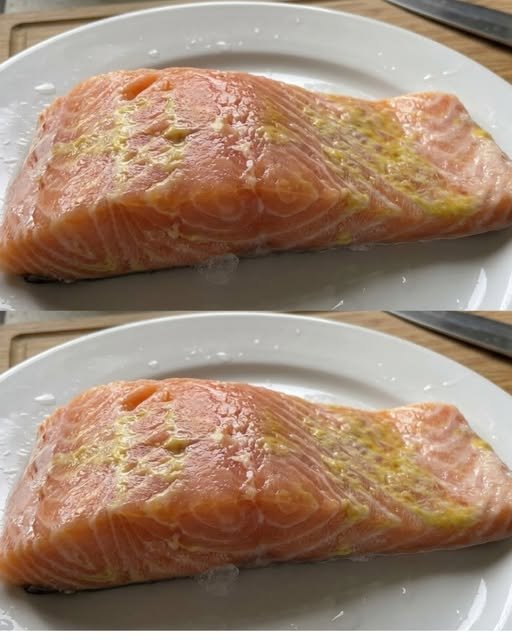
If your defrosted salmon has yellow on it, it’s usually harmless — but sometimes it’s a sign to toss it. Here’s how to tell the difference.
🟡 1. Yellow Fat (Most Common — Usually Normal)
Salmon naturally contains fat, especially between the muscle layers and along the belly.
When frozen and thawed:
- The fat can turn yellow or cream-colored
- It may look more noticeable after thawing
- It’s usually firm and doesn’t smell bad
This is completely normal, especially in:
- Farmed Atlantic salmon
- Fatty belly cuts
👉 Safe to eat if it smells fresh and the texture is firm.
🟡 2. Albumin Residue (White/Yellowish Protein)
Sometimes after thawing (or cooking), you’ll see a pale yellow or white substance on the surface.
That’s albumin, a natural protein that:
- Comes out when fish is frozen or cooked
- Is harmless and edible
- Looks slightly sticky or gel-like
👉 Not a spoilage sign.
🟡 3. Freezer Burn (Dry Yellow/Gray Patches)
If the salmon wasn’t tightly sealed, exposure to air can cause:
- Dry, dull, yellowish or gray patches
- Tough or leathery texture
- Faded color in spots
Freezer burn isn’t dangerous, but:
- It affects flavor and texture
- The fish may taste dry or stale
👉 You can trim small areas. If most of it is affected, quality will be poor.
🚨 4. Rancid Fat (Not Safe)
If the yellowing is paired with:
- Sour or strong fishy smell
- Slimy surface
- Very soft or mushy texture
- Ammonia-like odor
That suggests fat oxidation or spoilage.
👉 Do not eat it.
🟡 5. Rare: Bile Staining
Occasionally, improper cleaning during processing can leave a yellow-green stain from bile. This is uncommon in store-bought fish.
- Usually localized
- May taste bitter
👉 If it smells fine, trimming the area is typically safe.
✅ Quick Safety Check
Ask yourself:
- Does it smell clean and mild? ✔
- Is the texture firm? ✔
- No slime? ✔
If yes → It’s likely safe.
If no → Throw it out.
If you want, tell me:
- Wild or farmed?
- Fresh frozen or vacuum sealed?
- Where the yellow is located?
I can help you narrow it down.