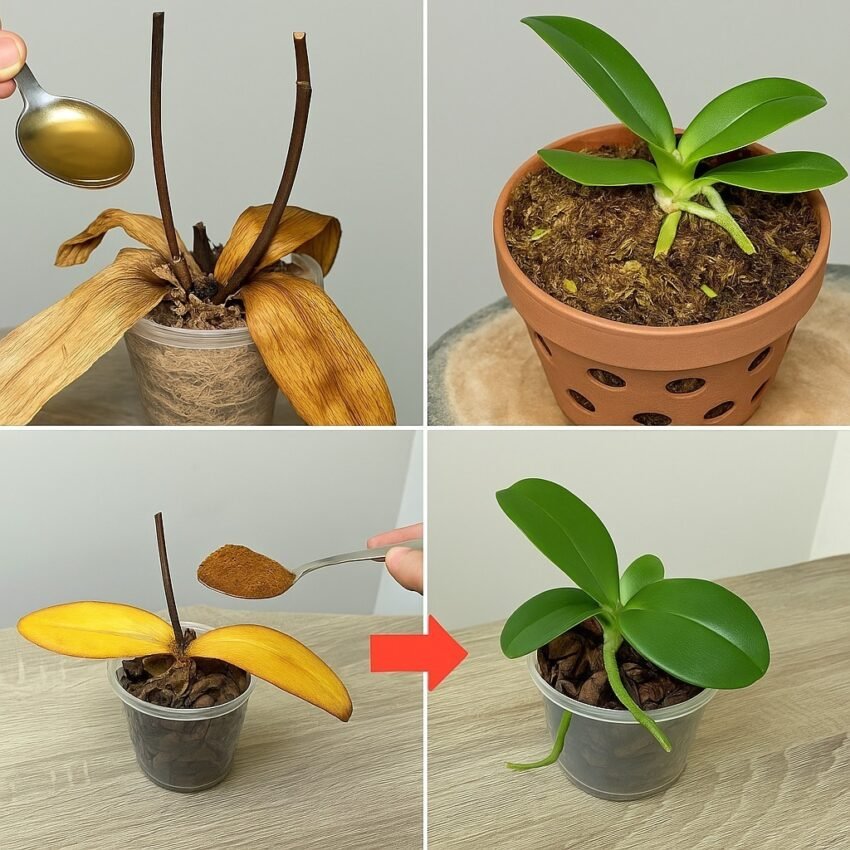
That headline is classic clickbait. Orchids don’t come back to life from “one spoon” of anything, and no single trick can make them bloom all year round.
However, there are real, effective things you can do to revive an orchid, especially if the roots are dead or dying.
Below is a safe, realistic method that actually helps.
✅ What to do if your orchid roots look dead
Signs of dead roots
- brown/black and mushy
- dry, shriveled, papery
- no green inside when sliced
Healthy roots look like
- firm and green/white
- plump, not mushy
🌿 The REAL way to revive a dying orchid
Step 1: Remove it from the pot
Take the orchid out and carefully remove the old bark.
Step 2: Trim dead roots
Use clean scissors and cut away:
- mushy roots
- black roots
- dry papery roots
Leave only the healthy, firm roots.
Step 3: Repot in fresh orchid mix
Use a mix made for orchids (bark, charcoal, perlite).
Important:
- Don’t use regular potting soil
- Orchids need airflow around roots
Step 4: Water correctly
A common cause of root death is overwatering.
Best watering method:
- Water once a week
- Let it drain completely
- Don’t let roots sit in water
Step 5: Provide proper light
Orchids need:
- bright, indirect light
- not direct sunlight
🌸 How to encourage blooming (realistically)
Orchids often bloom when they experience a cooler night temperature for a while:
- Keep them 55–65°F (13–18°C) at night for 2–3 weeks
- Then return to normal warmth
This can trigger blooming in many orchid types.
🧂 What about the “1 spoon trick”?
Most viral “spoon tricks” use things like:
- cinnamon
- aspirin
- sugar
- baking soda
They might help a little in very specific cases, but they won’t revive dead roots.
If you want, I can help you revive yours properly
Tell me:
- What kind of orchid is it? (Phalaenopsis, Cattleya, etc.)
- Are the roots mostly brown or mostly dry?
- Is it in bark or soil?
I’ll give you a step-by-step rescue plan for your exact situation.