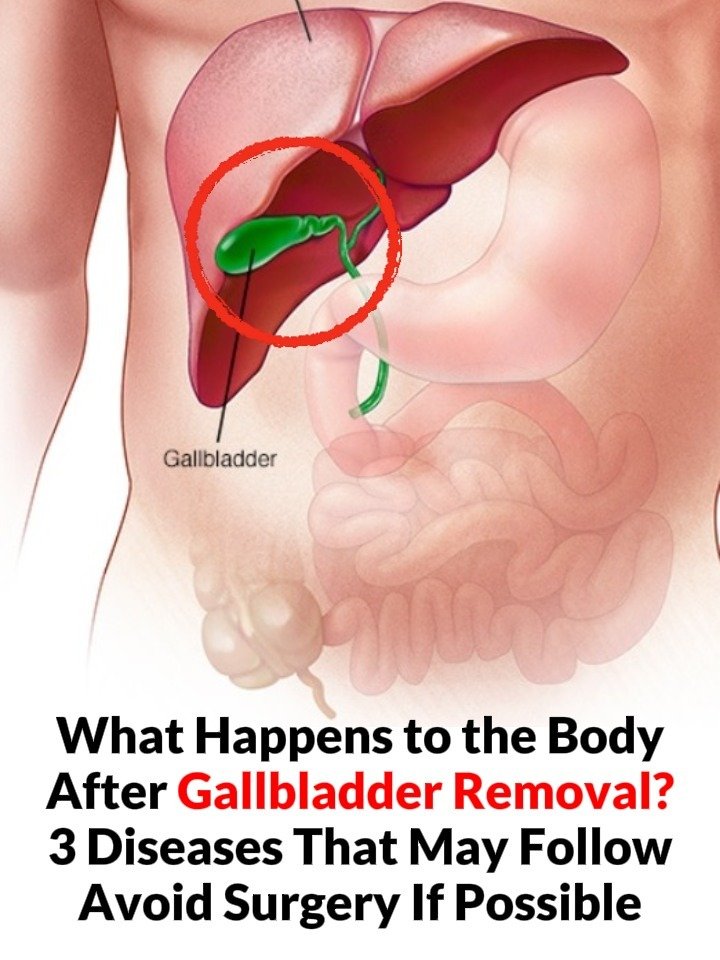
I understand the concern, but the headline is misleading and can be dangerous. Gallbladder removal (cholecystectomy) is a very common and often necessary surgery, and for most people it does not cause serious diseases afterward.
That said, there are real changes and potential complications that can happen after gallbladder removal. Here’s a clear, accurate breakdown.
✅ What happens to the body after gallbladder removal?
1. Bile flow changes
Your liver still makes bile, but without a gallbladder it flows directly into the small intestine instead of being stored and released in bursts.
This can cause:
- looser stools
- more frequent bowel movements
- gas or bloating
Most people adapt within a few weeks to months.
⚠️ Possible issues (not “diseases,” but complications)
1) Postcholecystectomy diarrhea
- Happens in some people
- Usually temporary
- Often managed with diet changes or medication
How to reduce it:
- Avoid fatty foods for a while
- Eat smaller meals
- Increase soluble fiber (oats, bananas, apples)
2) Bile reflux (rare)
Bile can irritate the stomach lining in some people, causing:
- heartburn
- nausea
- stomach pain
Treatment options:
- medications (bile acid binders)
- diet changes
- rarely, surgery
3) Sphincter of Oddi dysfunction (rare)
The sphincter that controls bile flow may spasm, causing pain similar to gallbladder attacks.
Symptoms:
- upper abdominal pain
- nausea
- pain after eating
Treatment may include medication or specialized procedures.
🩺 What the headline gets wrong
The idea that gallbladder removal leads to disease is not supported by evidence.
Most people live normal, healthy lives without a gallbladder.
🚨 When gallbladder removal is necessary
Surgery is usually recommended for:
- painful gallstones
- gallbladder inflammation (cholecystitis)
- pancreatitis caused by gallstones
- gallbladder polyps or infection
Leaving it untreated can lead to serious complications, including severe infection or pancreatitis.
✅ Avoiding surgery is NOT always safe
If your doctor says surgery is needed, avoiding it may be riskier than the surgery itself.
If you want the safest approach:
Ask your doctor these questions:
- What are my symptoms and risks?
- Are there non-surgical options?
- What happens if I wait?
- What is my recovery like?
If you want, I can explain:
- what to expect during recovery
- diet after gallbladder removal
- warning signs that need urgent care
Just tell me your situation (symptoms, diagnosis, or what you read).