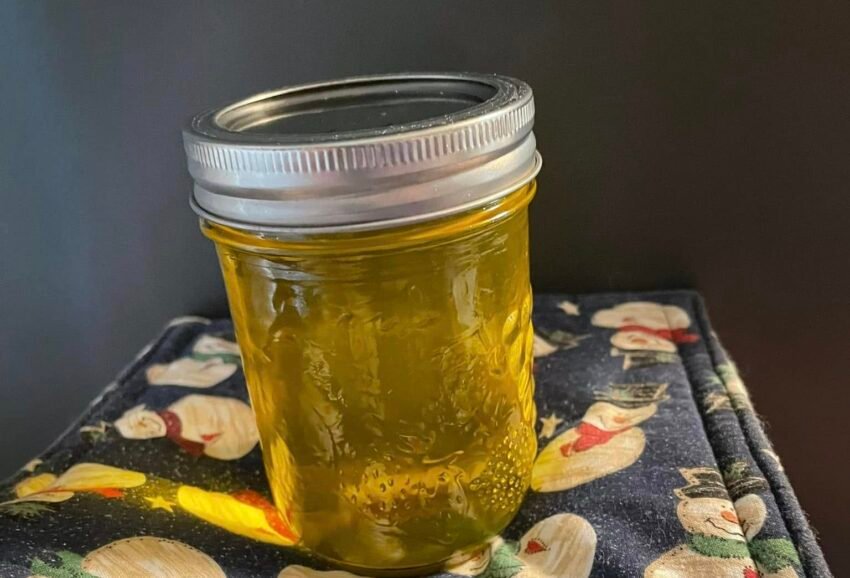
Learn how to make rich and aromatic clarified butter at home. Perfect for cooking, frying, or adding a nutty flavor to Indian dishes, desserts, and baked goods.
Ingredients
-
1 cup (225 g) unsalted butter
(Use high-quality unsalted butter for best flavor. You can double or triple the quantity as needed.)
Equipment
-
Medium heavy-bottomed saucepan
-
Spoon or spatula
-
Fine mesh strainer or cheesecloth
-
Heatproof container/jar for storage
Directions
Step 1: Melt the Butter
-
Place the butter in a medium saucepan over low to medium-low heat.
-
Let it melt slowly, stirring occasionally to prevent burning.
Step 2: Simmer and Separate
-
Once fully melted, the butter will start to bubble gently.
-
You will notice three layers forming:
-
Foam on top (milk solids and impurities)
-
Clear golden liquid in the middle (this is the clarified butter)
-
Milk solids at the bottom
-
-
Reduce heat to low and let the butter simmer gently for 10–15 minutes.
Step 3: Skim the Foam
-
Using a spoon, carefully skim off the foam from the surface.
-
Continue simmering gently, making sure the butter does not brown too much (unless you want nutty brown ghee flavor).
Step 4: Strain the Butter
-
Once the butter turns clear golden and the milk solids at the bottom turn slightly brown, remove from heat.
-
Let it cool for 2–3 minutes.
-
Strain the liquid through a fine mesh strainer or cheesecloth into a clean, dry jar or container.
-
Avoid pouring the brown solids at the bottom into the jar, as this can give a burnt taste.
-
Step 5: Store
-
Let the clarified butter cool completely to room temperature.
-
Seal the jar and store:
-
At room temperature for 2–3 weeks
-
In the refrigerator for several months
-
Tips for Perfect Clarified Butter
-
Use unsalted butter for best flavor.
-
Low and slow heat prevents burning and keeps the flavor pure.
-
You can brown the milk solids slightly at the bottom for a nutty ghee flavor, common in Indian cooking.
-
Always store in a dry, airtight container to preserve shelf life.
Clarified butter is now ready to use for:
-
Sautéing vegetables or meats
-
Frying spices for Indian curries
-
Baking and desserts
-
Spreading on bread or drizzling over hot rice